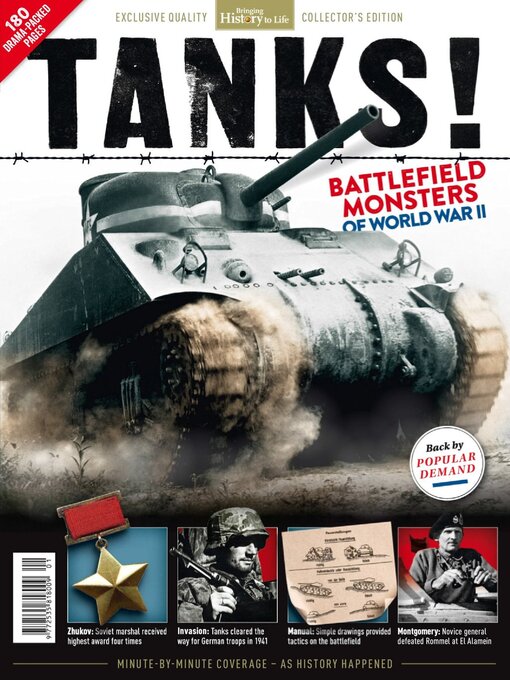
 Thanks! Battlefield Monsters of World War II
 Road to Victory
 Greatest battles WW2
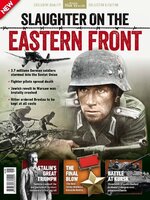 Slaughter at the Eastern front
 WW2 1939 - 1945
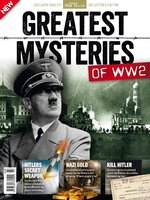 WW2 Mysteries
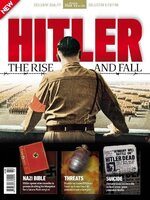 Hitler Life and Death
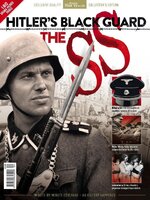 Waffens SS
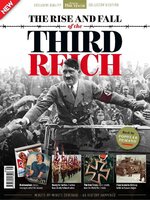 The Rise & Fall of the Third Reich
Bringing History to Life Collector’s Edition’ is a 180 page must read special issue packed with in depth WW2 historical information narrated as a story and illustrated with informative graphs and timelines. Readers interested in WW2 will not be disappointed.
BATTLEFIELD TITANS
JAPAN SHOWN THE DOOR • Summer 1939 and the Red Army breaks Japan’s 6th Army in border battles at Mongolia. Japan abandons plans to take Siberia, and the Soviets avoid a devastating war on two fronts. It would play a crucial role in determining the war.
DEVELOPED ON THE BATTLEFIELD • Once its short-barrelled and slow gun was replaced with a longer barrel in the middle of WWII, the Panzer IV became a force to be reckoned with. It was no longer simply a support vehicle – now it could compete as a full-blown tank.
General never gave up • Columns were important to an old cavalry officer like George Patton. He viewed tanks as the future of cavalry, and believed he was superior to armoured opponents like Rommel and Guderian.
AFRIKA KORPS SAVED ITALIANS • In February 1941, as the German General Erwin Rommel and his Afrika Korps (DAK) arrived at Tripoli in Libya, they were met by an exhausted and dejected Italian army. Luckily, the port city was still in Axis hands. Rommel’s cure for the low morale was an offensive that would soon make him the Allies’ worst enemy.
TANKS IN BATTLE How combat tactics worked • During World War II, tank technology and tactics saw radical development. Indeed, the same basic principles that were established then still apply to the battlefield today. How did the fighting take place? Harald Sonesson guides us through battalion, platoon and company level.
Bravado in the desert • In his daring attack at Gazala in 1942, Erwin Rommel demonstrated his tactical brilliance by turning a disadvantage into an advantage and defeating an enemy twice his size. Yet Rommel’s greatest challenge lay not on the battlefield, but in supplying his troops.
NOVICE FORGED AHEAD ON THE BATTLEFIELD • General Bernard Montgomery had a sparse CV when he was appointed commander of the British troops in the desert war. Yet the general managed to defeat Rommel in North Africa, plan D-Day, liberate the occupied countries – and make himself very unpopular with American generals.
THE SOVIETS’ BEST TANK • The Soviet T-34/76 was arguably a better tank than its German competitors and it enjoyed a clear numerical advantage – nevertheless, it was Germany who stormed ahead on the Eastern Front in the summer of 1941. The Red Army failed to exploit the T-34/76’s advantages due to poor planning, incomplete training and lack of supplies.
MAN AGAINST MACHINE How the infantry took on tanks • It was an almost hopeless task being an infantry soldier attempting to defeat enemy tanks before armour-piercing shells were developed. Their unconventional solutions were as numerous as they were deadly.
SOVIETS INVADED Stalin wasn’t prepared for German offensive • Operation Barbarossa in 1941 signalled the start of some of the largest and most unforgiving battles in history. The invasion marked the beginning of the end for Hitler’s domination of Europe.
BUILT FOR VICTORY • It was expensive and only 1,300 units were ever produced, but the Tiger I achieved legendary status on the battlefield during World War II thanks to its heavy armour and powerful gun.
THE GREAT DECEPTION • When German spy planes flew over southern England in the spring of 1944, the pilots witnessed a terrifying sight. Where before the landscape had lain deserted, the Allies were now building a vast army. Tanks and planes were ready to attack, while training camps buzzed with hundreds and thousands of men, but the scene was just a giant ruse to mislead the Nazis ahead of the Normandy landings. The deception also involved an...